Driveway or parking pad: drawing the line in a property attribute schema
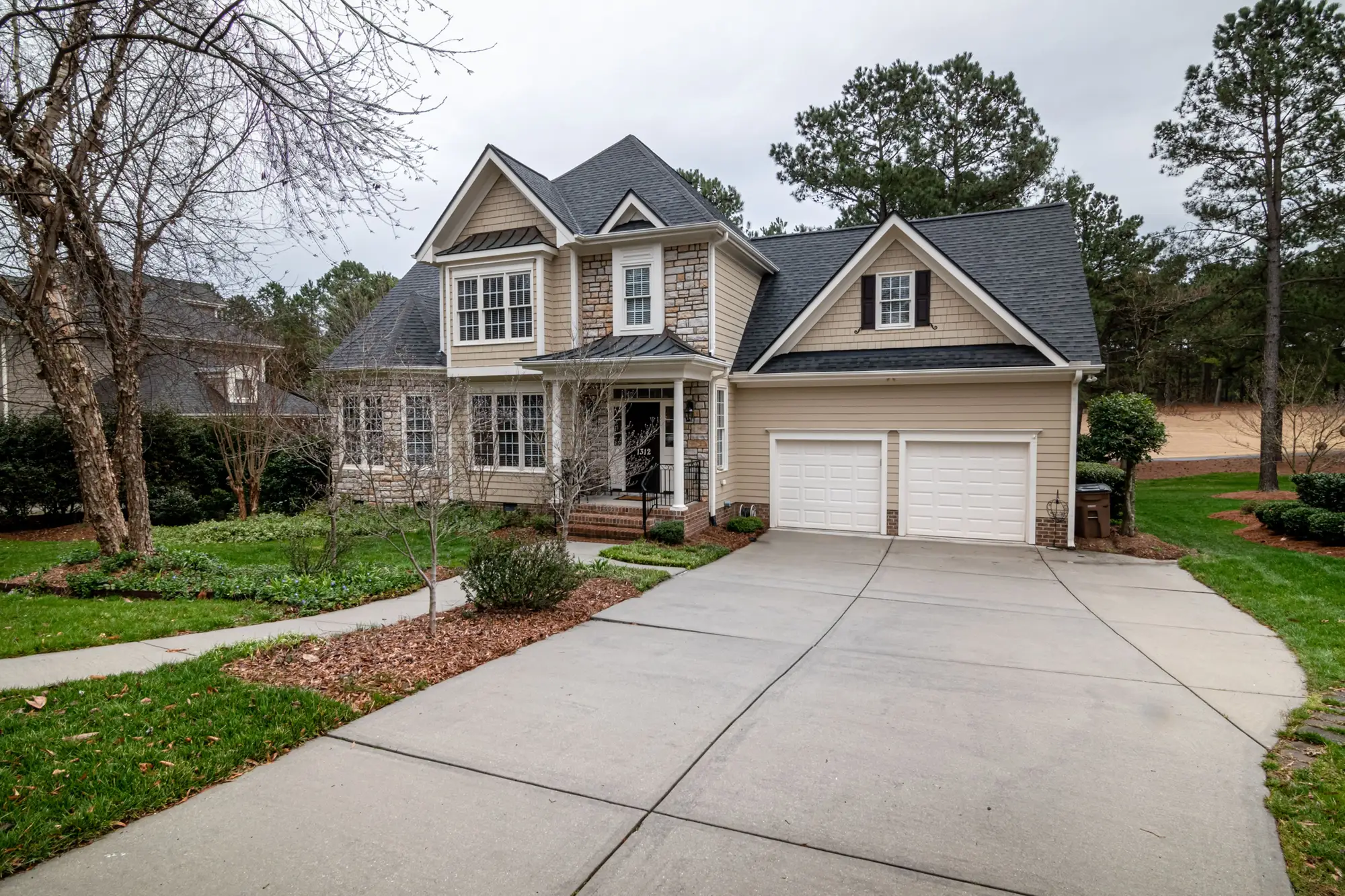
A listing photo shows a paved rectangle next to a house. Is it a driveway? A parking pad? Nobody on the MLS side bothered to specify, and the tax record just says "paved surface, yes/no." If you're building out an attribute table across tens of thousands of parcels, that ambiguity isn't a footnote. It decides which field the value lands in, and whether two records your model calls comparable are actually describing the same thing.
Most schemas inherited their driveway field from assessor data, which was never built to distinguish vehicle access type; it just flags whether a paved path exists. Once you start using "has driveway" as a comp filter or a condition signal, you need a rule that holds up across every reviewer, every region, and every refresh cycle, applied the same way regardless of who filled in the field first.
What separates a driveway from a parking pad
A driveway, in the sense most appraisers and data teams mean it, runs from the street or curb cut to a garage, carport, or defined parking area at the house. It's continuous, it's the primary vehicle route onto the lot, and it usually predates or matches the structure's build date.
A parking pad is a standalone paved or graveled area that doesn't connect anything. It's often added after the fact: a widened patch beside the house, a gravel pull-off at the rear of a narrow urban lot, a slab poured where a carport used to sit. No garage, no through-connection to the street in the way a driveway implies. Rowhouses with alley access are a common case: the alley is a shared easement, the pad at the back of the lot is what the owner parks on, and it's not a driveway in any functional sense even though some assessor databases lump it under paved-surface fields.
The edge cases are where most taxonomies fall apart:
- A circular driveway with no garage at the end. Still a driveway, because it's continuous and functions as the primary access route.
- A shared driveway serving two attached units. Still a driveway for both parcels, even though neither owns it outright.
- A gravel strip beside a detached garage, separate from the paved path leading to it. That's two features, not one: a driveway and a parking pad on the same lot.
The test that holds up across most of these: does the surface connect the street to a garage, carport, or the house itself, or does it sit apart as extra capacity? If it connects, it's a driveway. If it's bolted on beside the real access route, it's a parking pad.
Why the distinction shows up downstream
This matters less for any single record and more for what happens when a few hundred thousand of them get pulled together. If one enrichment pass tags a rear pad as "driveway" and another tags the same feature type as "no driveway, has parking area," your comp logic treats functionally identical properties as different. A model filtering on driveway presence to adjust for off-street parking will either overcount or undercount depending on which convention got used that month. And because this field rarely gets manually re-reviewed once it's populated, the inconsistency doesn't surface until someone's running a QA pass months later and finds the drift.
The fix is a rule applied the same way every time: a written decision tree (connects to garage/street? continuous? primary access?) checked against the same imagery standard across the whole portfolio, instead of re-interpreted by whichever reviewer or vendor touched a given batch of listings. That's the specific gap Property Attributes fills: driveway and parking pad fields assigned from the same visual standard across your full dataset, keyed to your existing property IDs, refreshed on an annual cycle instead of left to drift between manual reviews.
If your driveway field has been a judgment call for too long, it's worth seeing what a consistent one looks like applied to your own portfolio.