What counts as an outbuilding in a property record?
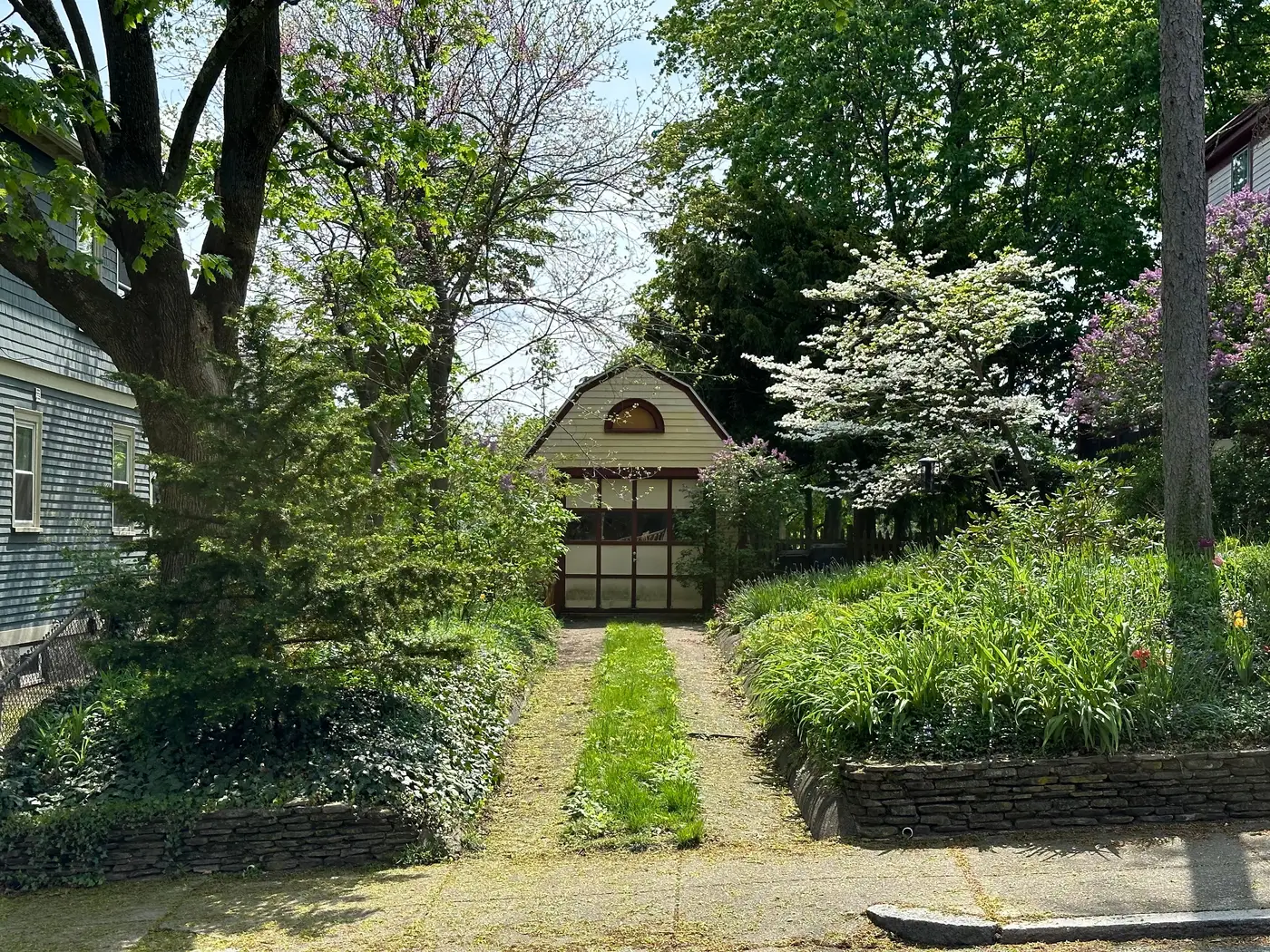
If you've ever tried to standardize a schema across a few million parcels, you already know the outbuilding field is where things fall apart. Someone's listing agent writes "bonus structure." The county assessor's record says "accessory building, 120 sq ft." The photo shows what's clearly a garden shed with a window box. None of these are wrong, exactly. They're just not the same thing, and when you're trying to build one attribute field that an AVM can actually use, "not the same thing" is a real problem.
So here's a working definition that holds up across most listing and assessor conventions: an outbuilding is any structure on the parcel that is detached from the primary dwelling and not a garage used for vehicle storage attached to or integral with the house. That second clause matters more than people think, because garages are usually pulled into their own field (attached vs. detached vs. none), and folding them back into "outbuilding" just muddies both fields.
Under that definition, you're typically bucketing:
- Sheds and garden structures (under roughly 200 sq ft, usually no permanent foundation)
- Barns and agricultural buildings (hay storage, equipment bays, livestock shelters)
- Detached garages or carports not counted elsewhere in your schema
- Workshops, studios, and "flex" structures with power or plumbing run to them
- Guest houses, ADUs, and casitas, which arguably deserve their own field entirely if your portfolio has enough of them to matter
A photo tells you the category at a glance, even when the tax record only lists a square footage and a generic code.
Shed vs. barn: where the line sits
This is the comparison that generates the most support tickets, so it's worth being specific. Size is the first filter, not the only one. A structure under roughly 150-200 sq ft with a single door and no visible bays reads as a shed in almost every regional convention. Once you're past that footprint, and especially once there's a sliding or barn-style door, a loft line visible in the roof pitch, or multiple access points, you're looking at a barn or agricultural outbuilding regardless of what the listing copy calls it.
Roof form helps too. Gambrel and gable-with-cupola rooflines are barn tells even on structures that have been converted to garages or studios. A flat-roofed, single-pitch structure tucked against a fence line is almost always a shed, no matter how large the listing agent's adjectives get.
Some structures sit right on the boundary, and a rules-based classifier will occasionally call a judgment differently than a human appraiser would. That's true of any attribute derived from imagery rather than a site visit, and it's worth building your downstream logic to tolerate it rather than treating every edge case as a data quality bug.
Why this matters for valuation, not just data hygiene
An AVM that treats "has outbuilding: yes/no" as a flat boolean is leaving value on the table in both directions. A finished workshop with power and a concrete pad adds real comp value in a lot of markets. A collapsing shed that's one storm away from being a liability does the opposite, and a record that just says "outbuilding: yes" can't tell you which one you're looking at. Detached structure classification only earns its keep when it captures count, rough size tier, and apparent condition, not just presence.
That's also where manual review breaks down at scale. A reviewer can eyeball a photo and correctly call "shed, fair condition" in about four seconds. Multiply that by a portfolio of a few hundred thousand parcels and it stops being a task a team does between other tasks. It becomes the team's whole job, or the field stays blank, which is what happens on most portfolios larger than a county or two.
Property Attributes was built around exactly this gap: it reads VHR imagery per parcel and returns outbuilding presence, a rough count, and visible condition as attribute fields keyed to your property IDs, refreshed annually. It won't adjudicate every shed-versus-barn edge case the way a human with a tape measure would, but it gives you a consistent, imagery-grounded call at a scale no review queue can match. If your schema has an outbuilding field sitting empty across most of your portfolio, it's worth seeing what that field looks like filled in.